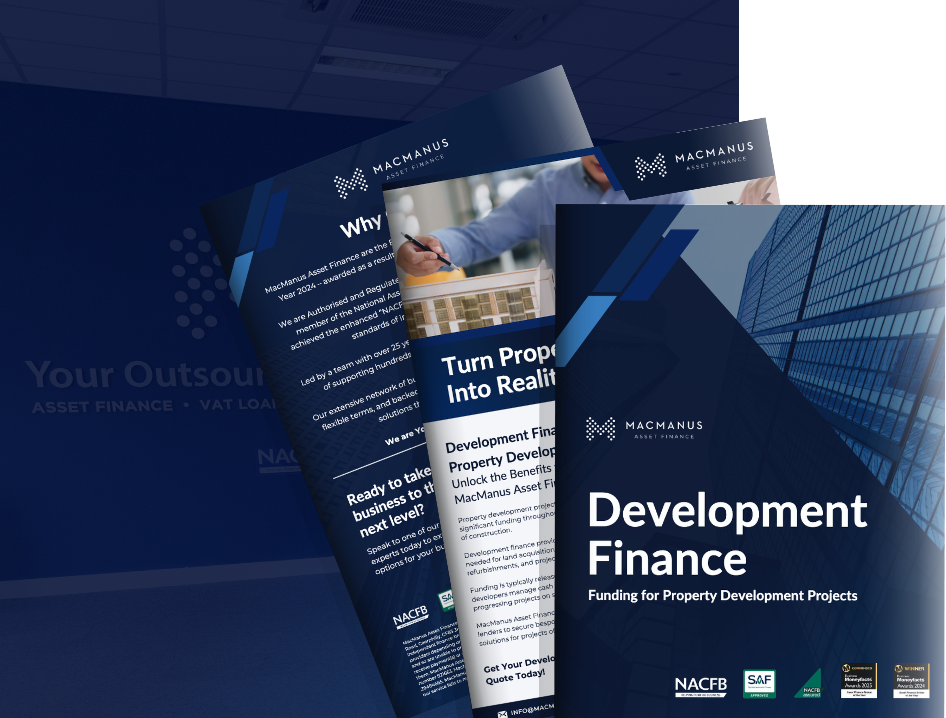
Development Finance for Property Projects

Structured funding solutions for residential, commercial, and mixed-use developments.
Home » Solutions » Development Finance
Development finance is a specialist form of property funding used to support ground-up construction projects, major refurbishments, conversions, and property development schemes. It is commonly used by developers, investors, construction firms, and experienced property businesses looking to fund projects where traditional property finance may not be suitable.
Unlike standard commercial mortgages, development finance is designed specifically around the staged nature of construction and development projects. Funding is usually released in phases as the build progresses, helping developers manage cash flow throughout the lifecycle of a project.
Development finance is widely used across the UK property sector for:
Whether a business is building residential units, converting commercial property, or funding a large-scale construction project, development finance can provide a structured funding solution aligned with project delivery and exit planning.
At MacManus Asset Finance, we work with developers, investors, and businesses across the UK to help source suitable development finance solutions tailored to project requirements and commercial objectives.

What Is Development Finance?

Development finance is a short-to-medium-term funding facility designed to support property construction, refurbishment, or development projects.

The funding is typically secured against:

  • Development site
  • Land
  • Property being developed

Unlike conventional mortgages, development finance is structured around:

  • Project costs
  • Build stages
  • Anticipated project value upon completion
Funds are normally released in stages throughout the build process rather than as a single upfront loan.

Development finance is commonly used for:

  • New-build residential developments
  • Commercial developments
  • Heavy refurbishment
  • Property conversions
  • Mixed-use schemes

The facility is generally repaid through:

  • Property sales
  • Refinance onto long-term lending
  • Project exit proceeds

How Development Finance Works

Development finance is structured differently from traditional property lending because the asset is being created, improved, or significantly altered during the funding period.
Asset finance broker helping UK business

The lender reviews the proposed development project, including:

  • Project type
  • Planning permission
  • Build costs
  • Anticipated end value
  • Borrower experience

The strength and viability of the overall project are critical factors.

A professional valuation is carried out to assess:

  • Current land or property value
  • Projected gross development value (GDV)
  • Project feasibility

The lender structures the facility around:

  • Land acquisition costs
  • Construction costs
  • Contingency requirements
  • Project timelines

Funding is usually split into stages.

Rather than receiving the full facility upfront, developers typically receive staged drawdowns as works progress.


Additional funds are released after monitoring surveyors confirm completion of agreed build stages.

Once the development is completed, the facility is repaid through:

  • Sale of completed units
  • Refinance
  • Another agreed exit strategy

What Can Development Finance Be Used For?

Development finance supports a broad range of residential and commercial property projects.

Ground-Up Residential Developments

Developers commonly use development finance to fund:

  • New-build housing schemes
  • Apartment developments
  • Residential site construction

Commercial Developments

Commercial projects may include:

  • Office developments
  • Industrial units
  • Warehouses
  • Retail premises

Mixed-Use Developments

Development finance may support projects combining:

  • Residential
  • Retail
  • Office
  • Hospitality elements

Property Conversions

Facilities are often used for:

  • Office-to-residential conversions
  • Barn conversions
  • Permitted development projects

Heavy Refurbishment Projects

Major structural refurbishment and redevelopment schemes may also qualify for development finance.

Land Acquisition

Some lenders may support:

  • Strategic land purchases
  • Development site acquisition
  • Planning gain opportunities

Types of Development Finance

Different projects require different funding structures.
Residential
Development Finance

Used for:

  • Housing developments
  • Apartment blocks
  • Residential investment projects
This is one of the most common forms of development lending in the UK market.
Commercial
Development Finance

Supports development of:

  • Offices
  • Industrial property
  • Logistics facilities
  • Hospitality venues
  • Commercial premises
Refurbishment Finance

Used where a property requires:

  • Major renovation
  • Structural works
  • Significant repositioning

This differs from light refurbishment bridging finance because works are often more extensive.

Mezzanine Finance
Some projects use mezzanine finance to supplement senior debt and increase total available project funding.
This is generally more specialist and often used on larger schemes.
Development Exit Finance

Development exit facilities may help developers transition from construction finance to:

  • Property sales
  • Longer-term refinance arrangements
This can reduce pressure where unit sales are progressing more slowly than expected.

Why Developers & Businesses
Use Development Finance

Development finance is designed specifically around the realities of property development and staged construction projects.
Development projects often require substantial capital before any sales income is generated.

Development finance helps fund:

  • Labour
  • Materials
  • Contractors
  • Infrastructure costs
Rather than tying up all available business capital in a project, developers can spread funding requirements across the facility structure.
Development finance may allow developers to undertake projects larger than would otherwise be possible using internal cash reserves alone.
Because funds are released in stages, developers only draw what is required at each point in the build cycle.
Experienced developers often use development finance to scale operations and manage multiple projects simultaneously.

Understanding Gross Development Value (GDV)

Gross Development Value, often referred to as GDV, is one of the key concepts in development finance.
GDV refers to the projected market value of the completed development once construction is finished.

Lenders use GDV to help assess:

  • Project viability
  • Risk
  • Maximum loan sizing

Factors influencing GDV include:

  • Property type
  • Location
  • Market conditions
  • Specification quality
  • Local demand
Accurate GDV assessment is critical in development finance structuring.

Loan-to-Cost & Loan-to-GDV Explained

Development finance facilities are often assessed using:

  • Loan-to-Cost (LTC)
  • Loan-to-GDV ratios

Loan-to-Cost (LTC)
This measures the percentage of total project costs funded by the lender.

Project costs may include:

  • Land purchase
  • Build costs
  • Professional fees
  • Contingencies

Loan-to-GDV (LTGDV)
This measures borrowing against the projected completed value of the development.

Lenders assess both ratios carefully when determining facility structure.

Benefits of Development Finance

Staged Funding Structure

Funds are released progressively throughout the project, helping manage cash flow efficiently.

Access to Larger Project Funding

Development finance can support projects beyond the scope of internal capital reserves.

Specialist Property Lending

Facilities are designed specifically around construction and development risk.

Flexible Exit Structures

Repayment can often align with:

  • Property sales
  • Refinance
  • Investment exit strategies

Supports Business Growth

Experienced developers may use development finance to scale project pipelines and expand operations.

Development Finance vs Bridging Finance

Although both are short-term secured property facilities, they are designed for different purposes.

Development Finance

Designed for construction projects

Staged drawdowns

Based on build costs & GDV

Used for development works

Includes monitoring surveyors

Bridging Finance

Designed for short-term funding gaps

Often single drawdown

Primarily asset and exit based

Used for transitional funding

Usually simpler structure

Some developers may use bridging finance before development finance is arranged or after completion as exit finance.

Things to Consider Before
Taking Development Finance

Development finance can be highly effective, but projects should be carefully planned and managed.

Development projects may encounter:

  • Delays
  • Contractor issues
  • Material cost increases
  • Planning complications

Changing property market conditions may affect:

  • Sales values
  • Refinance opportunities
  • Project profitability
Unexpected build costs can impact project viability if contingency planning is insufficient.
A realistic exit strategy is essential before entering into a development finance agreement.

Development finance may involve:

  • Arrangement fees
  • Monitoring surveyor fees
  • Valuation costs
  • Legal fees
  • Interest charges

Borrowers should understand the total project funding cost before proceeding.

Eligibility for Development Finance

Eligibility varies between lenders, but common considerations include:

  • Borrower experience,
  • Planning status
  • Project viability
  • Build costs
  • Projected GDV

Lenders often assess:

  • Contractor arrangements
  • Development timelines
  • Contingency planning
  • Market demand
Experienced developers may access broader funding options depending on track record.
Asset finance broker helping UK business

Why Businesses Work With
MacManus Asset Finance

MacManus Asset Finance works with developers, investors, and commercial borrowers across the UK to help source suitable development finance solutions.

We understand that every project has different:

  • Timelines
  • Risk profiles
  • Funding structures
  • Commercial objectives

Our approach focuses on:

  • Understanding project requirements
  • Assessing development funding needs
  • Identifying suitable lender options
We work with a broad panel of commercial and specialist property finance providers across residential, commercial, and mixed-use development sectors.

Frequently Asked Questions

Development finance is a specialist property funding solution designed for construction, refurbishment, and property development projects.
Funds are usually released in stages throughout the build process as construction milestones are completed.

Common uses include:

  • Residential developments
  • Commercial schemes
  • Conversions
  • Refurbishment projects
Gross Development Value (GDV) refers to the projected market value of the completed development.
Yes. Development finance is typically secured against the property or land being developed.

A drawdown is a staged release of funds during the project lifecycle.

Some lenders may consider first-time developers depending on:

  • Project quality
  • Professional team strength
  • Overall experience
Terms vary depending on project size and complexity, but development finance is generally designed as a short-to-medium-term facility.

An exit strategy explains how the loan will be repaid, such as through:

  • Property sales
  • Refinance
  • Investment disposal

Yes. Development finance can support:

  • Offices
  • Warehouses
  • Industrial units
  • Retail property
  • Mixed-use developments

Related Finance Options

Business Loans

Expand, hire more staff or increase cash flow.

Invoice Finance

Turn unpaid invoices into working capital right away.

VAT Loans

Break your VAT bill into manageable payments.

Car Finance

Drive now, pay monthly. Don’t pay it all at once.

Explore Development Finance Options | Award-Winning
Asset Finance Brokers

Whether you are funding a residential development, commercial project, refurbishment scheme, or mixed-use opportunity, development finance can provide structured funding aligned with project delivery and growth objectives.
From experienced developers to growing property businesses, MacManus Asset Finance can help explore development finance solutions tailored to your project requirements.
Speak to our team to discuss development finance options for your next property project.
MoneyFacts Awards 2024
MoneyFacts Awards 2025

Your Outsourced Business
Finance Partner

We analyze your business profile to match you with
the right finance—fast and fee-free.

Get in touch

Stay Connected on Social

macmanus-awards

Sign up for our monthly newsletter to get exclusive business finance tips and offers.

MacManus Asset Finance Limited is authorised and regulated by the Financial Conduct Authority, FRN: 821663. MacManus Asset Finance Ltd is an authorised credit broker and not a lender. We work with a Panel of Lenders whose particulars will be supplied upon request to find a potentially suitable arrangement for your consideration. ICO registration Z9484665 and you can check via www.ico.org.uk.

MacManus Asset Finance Ltd, registered at Ground Floor, Unit 5 De Clare Court, Pontygwindy Road, Caerphilly, CF83 3HU. Company Register number is 05785432.
We will receive commission from lenders. Different lenders pay different amounts depending on different commission models. For transparency we work with the following commission models: percentage of the amount you borrow and rate for risk (this is based on the risk profile of the business). Further details of the commission model, calculation and amount will be disclosed to you throughout your customer journey.

Copyright 2026 | MacManus Asset Finance Ltd | All rights reserved.