Commercial Mortgages for UK Businesses
Commercial mortgages are commonly used by UK businesses to purchase, refinance, or invest in commercial property. Whether acquiring owner-occupied premises, purchasing investment property, expanding operational space, or refinancing an existing facility, commercial mortgages can provide businesses with access to longer-term property finance structured around their commercial objectives.
What Is a Commercial Mortgage?
commercial property.
Unlike residential mortgages, commercial mortgages are specifically designed for:
- Business premises
- Investment properties
- Mixed-use buildings
- Commercial real estate
Commercial mortgages are commonly used for:
- Purchasing premises
- Refinancing existing
- commercial property
- Property investment
- Business expansion
- Releasing equity from owned commercial assets
Facilities are typically repaid over longer periods, often ranging from several years to multiple decades depending on:
- Property type
- Lender criteria
- Borrower circumstances
How Commercial Mortgages Work
Commercial mortgages are structured around both the property and the borrowing business or individual.
The borrower identifies the commercial property being:
- Purchased
- Refinanced
- Invested in
This could include:
- Offices
- Warehouses
- Industrial units
- Retail premises
- Hospitality venues
- Mixed-use property
Most commercial mortgages require a deposit contribution.
The required deposit will vary depending on:
- Property type
- Borrower profile
- Intended use
- Lender appetite
The lender arranges a valuation to assess:
- Market value
- Property condition
- Rental potential (where relevant)
- Lending suitability
The lender reviews:
- Trading performance
- Affordability
- Financial accounts
- Sector profile
- Repayment capacity
Investment-led applications may also consider projected rental income.
Once approved, the lender issues a formal offer and legal work progresses towards completion.
The borrower then begins repayments over the agreed term.
Types of Bridging Finance
Examples include:
- Offices
- Warehouses
- Workshops
- Factories
- Retail premises
- Hospitality venues
Many businesses choose owner-occupied mortgages to:
- Gain long-term premises stability
- Avoid rising rental costs
- Build equity in property assets
Examples include:
- Commercial rental units
- Industrial investments
- Retail investments
- Mixed-use property portfolios
Lenders often assess:
- Projected rental income
- Tenant profile
- Lease terms
- Investment viability
Examples include:
- Shops with flats above
- Mixed-use developments
- Live/work premises
These facilities may involve more specialist underwriting depending on property structure.
What Properties Can Be Funded?
Offices
Industrial Units & Warehouses
Retail Premises
Hospitality Properties
Healthcare Premises
Healthcare providers may purchase:
- Dental surgeries
- Clinics
- Care facilities
- Specialist medical premises
Agricultural Property
Agricultural businesses may use commercial mortgages for:
- Farm buildings
- Storage facilities
- Operational land
Why Businesses Use Commercial Mortgages
This may reduce exposure to:
- Rental increases
- Lease renewals
- Landlord restrictions
Businesses may require larger premises to support:
- Staffing growth
- Increased production
- Inventory storage
- Additional customer demand
Commercial property investors may use mortgages to:
- Expand portfolios
- Generate rental income
- Diversify investments
Businesses may refinance existing commercial property to:
- Secure improved terms,
- Restructure borrowing,
- Release equity.
Benefits of Commercial Mortgages

Long-Term Finance Structure
Property Ownership
Potential Asset Appreciation
Greater Operational Control
Owning premises can provide businesses with:
- Greater flexibility
- Reduced landlord dependency
- More control over property use
Potential Rental Income
Equity Growth
Commercial Mortgages vs Leasing Commercial Premises
Commercial Mortgage
Builds property ownership
Long-term asset creation
Mortgage repayments build equity
Greater control over property
Deposit usually required
Leasing Premises
No ownership interest
Flexible occupancy
Ongoing rental payments
Landlord restrictions may apply
Lower upfront commitment

The most suitable option depends on:
- Business strategy
- Cash flow
- Growth plans
- Long-term operational requirements
Commercial Mortgage Interest Rates Explained
Commercial mortgage rates vary depending on:
- Property type
- Loan size
- Borrower profile
- Trading history
- Sector risk
- Deposit contribution
Rates may be:
- Fixed
- Variable
- Linked to base rate movements
Some facilities may also include:
- Arrangement fees
- Valuation costs
- Legal fees
- Broker charges

Deposit Requirements for Commercial Mortgages
The required deposit will vary depending on:
- Property type
- Borrower strength
- Intended property use
- Lender appetite

Industries That Commonly Use Commercial Mortgages
Things to Consider Before
Taking a Commercial Mortgage
Ownership also involves responsibility for:
- Maintenance
- Insurance
- Repairs
- Property management
Commercial property transactions often involve:
- Solicitors
- Surveyors
- Valuers
- Lender fees

Eligibility for Commercial Mortgages
Eligibility criteria vary between lenders, but common considerations include:
- Trading history
- Profitability
- Property type
- Borrower experience
- Affordability
Lenders may assess:
- Business accounts
- Bank statements
- Projected income
- Existing financial commitments
Investment applications may also consider:
- Tenant profile
- Lease agreements
- Projected rental yield
Why Businesses Work With
MacManus Asset Finance
We understand that commercial mortgages often form part of wider:
- Growth plans
- Operational expansion
- Investment strategies
- Long-term business objectives
Our approach focuses on:
- Understanding business requirements,
- Identifying suitable funding structures,
- Helping businesses navigate available lending options.
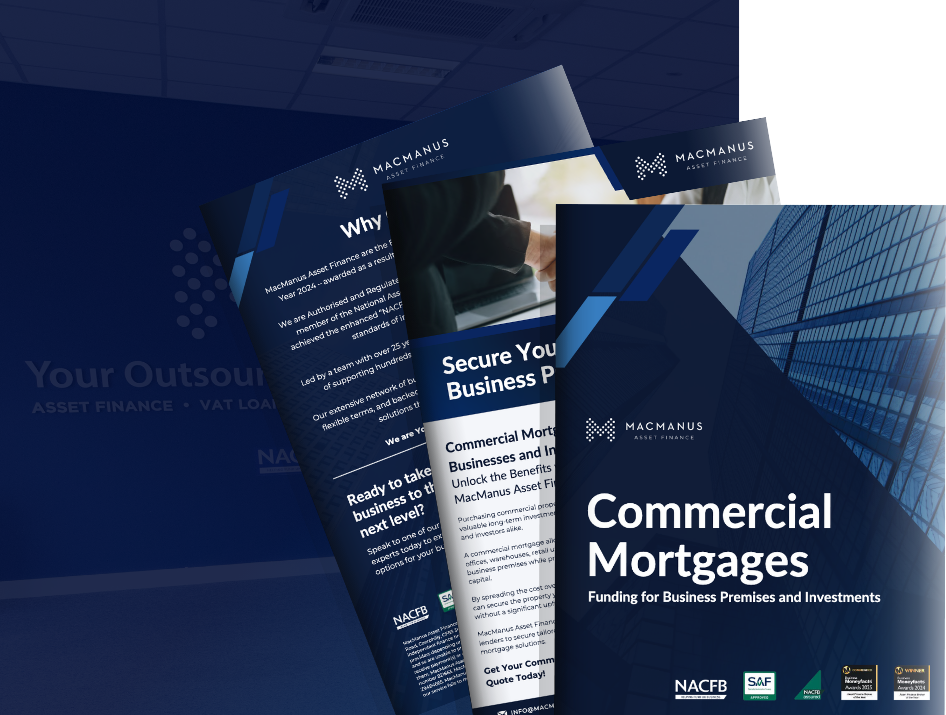
Commercial Mortgages Solution
with MacManus Asset Finance
Frequently Asked Questions
A commercial mortgage is a loan secured against commercial property used for business or investment purposes.
Commercial mortgages are commonly used for:
- Purchasing premises
- Refinancing property
- Property investment
- Business expansion
Deposit requirements vary depending on:
- Property type
- Borrower profile
- Lender criteria
Some lenders may consider newer businesses depending on:
- Sector experience
- Deposit contribution
- And overall application strength
Eligible properties may include:
- Offices
- Warehouses
- Retail premises
- Hospitality venues
- Industrial units
- Mixed-use properties
Some lenders may require personal guarantees depending on:
- Borrowing structure
- Company profile
- Risk assessment
Timescales vary depending on:
- Property complexity
- Valuation requirements
- Legal work
- Lender underwriting
Related Finance Options
Business Loans
- Up to £500,000 unsecured
- From 5% per annum
- 3 months to 5 years term
Invoice Finance
- Up to 90% of invoice value
- From 1 to 3% and discount rates from 1.7% over base
- Rolling or fixed agreements
VAT Loans
- Drive now, pay monthly. Don’t pay it all at once.
- Up to £2.000,000+
- 1 to 5 years term
Car Finance
- Up to £2.000,000+
- From 9.9% APR subject to credit profile
- 1 to 5 years term

Explore Commercial Mortgage Options | Award-Winning
Asset Finance Brokers
- OR CALL
- 0330 027 0433


Your Outsourced Business
Finance Partner
We analyze your business profile to match you with
the right finance—fast and fee-free.
- See our reviews on
- Trustpilot